
Electrical Upgrades
In today’s fast-paced industrial environment, electrical infrastructure plays a vital role in ensuring smooth operations, workplace safety, and business productivity. As industries continue to adopt advanced machinery, automation systems, and smart technologies, outdated electrical systems can become a major obstacle to growth and efficiency.
Modern electrical upgrades help industrial facilities reduce energy consumption, improve equipment performance, minimize downtime, and maintain compliance with safety standards. Whether you operate a manufacturing plant, warehouse, processing unit, or commercial facility, investing in electrical modernization can deliver significant long-term benefits.
With rising energy costs and increasing demand for operational efficiency, many industries are prioritizing electrical system improvements to remain competitive. Upgrading electrical infrastructure is no longer just a maintenance activity—it is a strategic investment that supports business growth and sustainability.
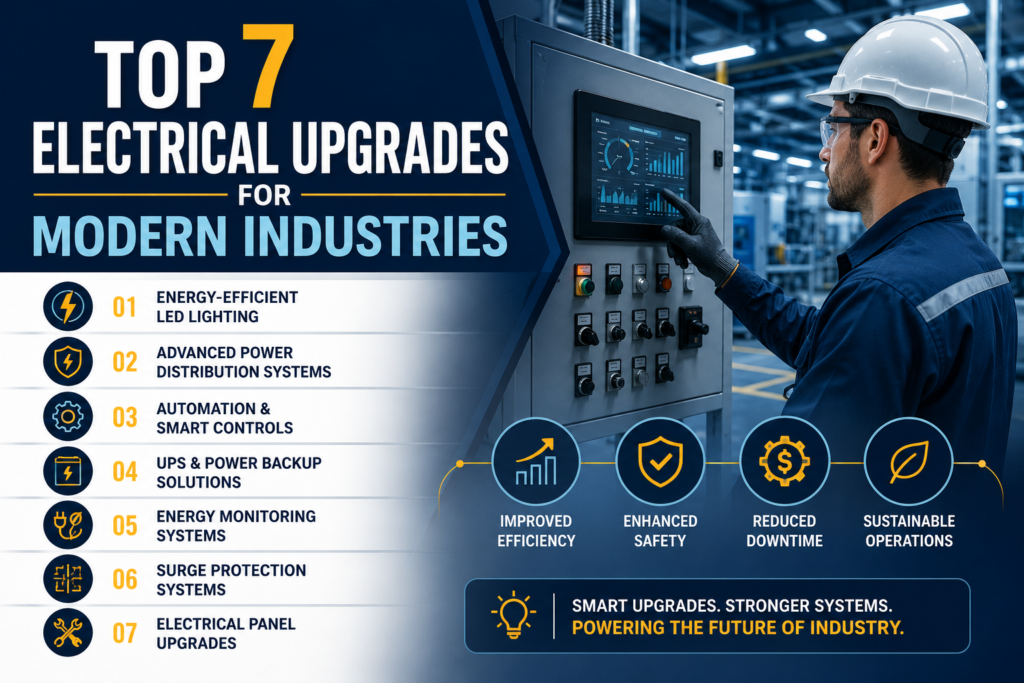
In this comprehensive guide, we will explore the Top 7 Electrical Upgrades for Modern Industries and explain how these improvements can transform industrial operations.
Why Electrical Upgrades Are Important for Industries
Industrial facilities depend heavily on electrical systems to power machinery, lighting, HVAC equipment, automation systems, and safety devices. As technology evolves, older electrical systems may struggle to meet modern operational requirements.
Common Challenges of Outdated Electrical Systems
- Frequent power interruptions
- Higher energy consumption
- Increased maintenance costs
- Equipment failures
- Safety risks
- Limited scalability
Electrical upgrades help overcome these challenges while improving reliability and performance.
Key Benefits of Electrical Modernization
- Improved energy efficiency
- Enhanced workplace safety
- Reduced operational costs
- Better equipment performance
- Increased productivity
- Future-ready infrastructure
Now let’s examine the top electrical upgrades that modern industries should consider.
1. Smart Electrical Distribution Panels
Electrical distribution panels are the heart of any industrial power system. Traditional panels provide basic power distribution, but modern smart panels offer advanced monitoring and control capabilities.
What Are Smart Electrical Panels?
Smart panels use digital technologies to monitor electrical loads, track energy consumption, and identify potential issues in real time.
Benefits of Smart Panels
Real-Time Monitoring
Facility managers can monitor power usage across different departments and equipment.
Improved Safety
Smart systems detect overloads, voltage fluctuations, and potential electrical faults before they become serious problems.
Energy Optimization
Accurate data helps businesses identify areas where energy consumption can be reduced.
Reduced Downtime
Early fault detection prevents unexpected equipment failures and operational interruptions.
As industries move toward smart manufacturing, intelligent electrical panels are becoming increasingly valuable.
2. Energy-Efficient LED Lighting Systems
Lighting is a significant contributor to industrial energy consumption. Replacing traditional lighting with LED technology is one of the simplest and most cost-effective upgrades available.
Why Upgrade to LED Lighting?
LED lighting systems consume significantly less electricity while providing superior illumination.
Advantages of LED Lighting
- Lower energy consumption
- Reduced maintenance costs
- Longer lifespan
- Improved visibility
- Better workplace safety
Industrial Applications
- Production floors
- Warehouses
- Loading docks
- Parking areas
- Office spaces
Enhanced lighting improves employee productivity and reduces the risk of workplace accidents.
3. Variable Frequency Drives (VFDs)
Industrial motors are responsible for a large portion of electricity usage in manufacturing and processing facilities.
What Are Variable Frequency Drives?
VFDs control the speed and power output of electric motors based on operational requirements.
Benefits of VFD Installation
Significant Energy Savings
Motors consume only the energy required for specific tasks.
Reduced Equipment Wear
Smooth motor operation minimizes mechanical stress.
Improved Process Control
Operators gain better control over machinery performance.
Extended Equipment Life
Reduced strain helps increase motor longevity.
Industries that rely on pumps, fans, conveyors, and compressors can achieve substantial savings through VFD implementation.
4. Industrial Power Backup Systems
Power outages can disrupt production schedules, damage equipment, and cause financial losses. Reliable backup power systems are essential for modern industries.
Common Backup Solutions
- Diesel generators
- Gas generators
- Uninterruptible Power Supply (UPS) systems
- Battery energy storage systems
Benefits of Backup Power Systems
- Continuous operations during outages
- Protection of critical equipment
- Reduced downtime
- Improved business continuity
Facilities that depend on uninterrupted operations should prioritize reliable power backup infrastructure.
5. Electrical Safety and Protection Systems
Workplace electrical safety is critical for protecting employees, equipment, and facilities.
Essential Electrical Safety Upgrades
Circuit Protection Devices
Modern circuit breakers provide faster and more accurate fault detection.
Surge Protection Systems
Protect sensitive equipment from voltage spikes and electrical disturbances.
Grounding Systems
Proper grounding reduces shock hazards and equipment damage.
Arc Flash Protection
Advanced protection systems minimize risks associated with electrical faults.
Benefits
- Enhanced worker safety
- Reduced accident risks
- Improved regulatory compliance
- Lower equipment damage costs
Safety-focused electrical upgrades are among the most important investments an industrial facility can make.
6. Industrial Automation and Smart Control Systems
Automation continues to transform industrial operations by improving efficiency and reducing manual intervention.
What Are Smart Control Systems?
These systems use programmable logic controllers (PLCs), sensors, and digital interfaces to automate processes.
Applications
- Production line automation
- Material handling systems
- HVAC controls
- Energy management
- Equipment monitoring
Benefits of Automation Upgrades
Increased Productivity
Automated systems operate more efficiently than manual processes.
Improved Accuracy
Automation reduces human error and enhances product quality.
Real-Time Data Access
Managers can monitor operations and make informed decisions quickly.
Lower Operating Costs
Reduced labor requirements and improved efficiency contribute to cost savings.
Smart control systems are becoming essential for industries seeking greater competitiveness.
7. Renewable Energy Integration
As sustainability becomes a priority, many industries are integrating renewable energy solutions into their electrical infrastructure.
Popular Renewable Energy Solutions
- Solar power systems
- Battery storage systems
- Hybrid energy systems
- Smart energy management platforms
Benefits of Renewable Energy Integration
Reduced Electricity Costs
Generating power on-site lowers dependence on utility providers.
Environmental Sustainability
Renewable energy helps reduce carbon emissions.
Energy Security
Diversified power sources improve reliability.
Long-Term Savings
Businesses benefit from lower energy expenses over time. Electrical upgrades
Electrical upgrades Electrical upgrades Electrical upgrades Electrical upgrades.
Industries investing in renewable energy often achieve both financial and environmental advantages. Contact