
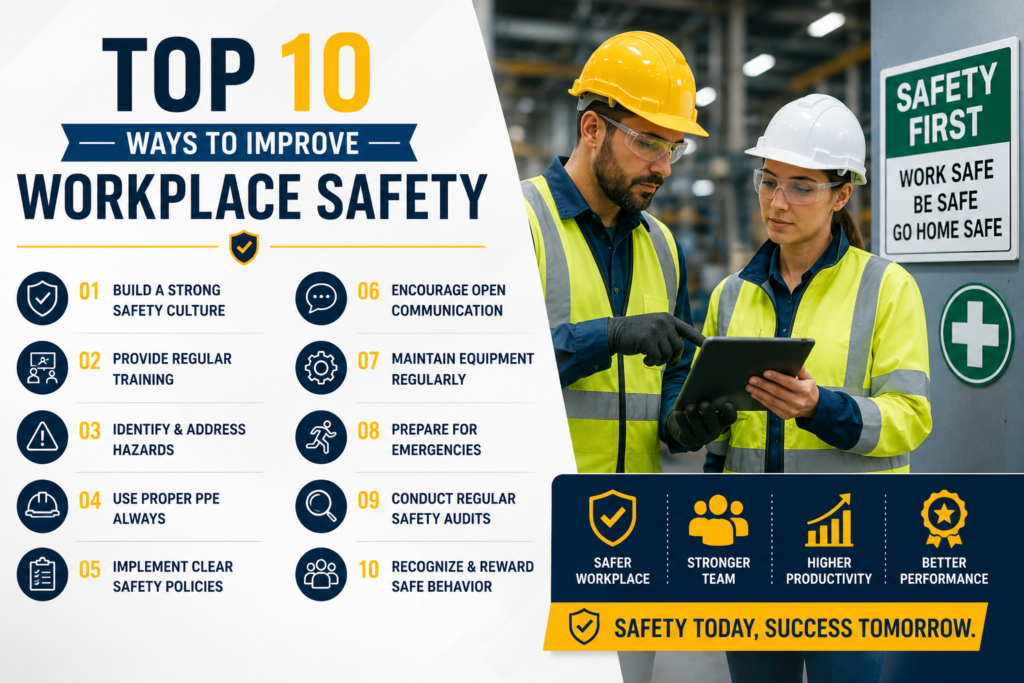
Workplace safety is one of the most important aspects of running a successful business. Whether you operate a construction site, manufacturing plant, warehouse, office, or industrial facility, ensuring the safety of employees should always be a top priority. A safe workplace not only protects workers from injuries and accidents but also improves productivity, reduces operational disruptions, and strengthens the reputation of your organization.
According to industry reports, workplace accidents can lead to significant financial losses, project delays, legal liabilities, and reduced employee morale. Many of these incidents are preventable through proper planning, training, and safety management practices.
Creating a culture of safety requires commitment from both management and employees. By implementing effective safety measures, businesses can minimize risks and foster a healthy working environment.
In this comprehensive guide, we will discuss the Top 10 Ways to Improve Workplace Safety and help organizations build safer, more productive workplaces.
Why Workplace Safety Matters
A safe work environment benefits everyone involved in the organization. Employees feel more confident, productivity improves, and businesses avoid costly accidents and legal complications.
Benefits of Workplace Safety
- Reduces workplace accidents and injuries
- Improves employee morale
- Increases productivity
- Minimizes downtime
- Reduces compensation claims
- Enhances company reputation
- Ensures regulatory compliance
- Supports long-term business growth
Investing in workplace safety is not an expense—it’s a valuable investment in the future of your business.
1. Provide Regular Safety Training
One of the most effective ways to improve workplace safety is through continuous employee training.
Employees must understand:
- Workplace hazards
- Safety procedures
- Emergency response plans
- Equipment handling guidelines
- Personal protective equipment (PPE) usage
Why Safety Training Matters
Regular training helps employees recognize risks before accidents occur. It also ensures that workers remain updated on new safety regulations and operational procedures.
Best Practices
- Conduct monthly safety sessions
- Organize emergency drills
- Provide role-specific training
- Offer refresher courses regularly
Well-trained employees are the first line of defense against workplace accidents.
2. Use Proper Personal Protective Equipment (PPE)
Personal Protective Equipment is essential in industrial, construction, and manufacturing environments.
Common PPE Includes
- Safety helmets
- Protective gloves
- Safety glasses
- Ear protection
- High-visibility clothing
- Safety shoes
- Respiratory masks
Benefits of PPE
- Reduces injury risks
- Protects against hazardous materials
- Improves employee confidence
- Ensures regulatory compliance
Employers should ensure that PPE is readily available, properly maintained, and consistently used.
3. Conduct Regular Workplace Inspections
Routine inspections help identify potential hazards before they cause accidents.
Areas to Inspect
- Machinery and equipment
- Electrical systems
- Walkways and exits
- Fire protection equipment
- Storage areas
- Workstations
Inspection Benefits
- Early hazard detection
- Reduced accident risks
- Improved equipment reliability
- Better compliance with safety standards
Regular inspections create a proactive approach to workplace safety management.
4. Maintain Clean and Organized Workspaces
Poor housekeeping is a leading cause of workplace injuries.
Cluttered work areas can lead to:
- Slips and falls
- Equipment damage
- Fire hazards
- Blocked emergency exits
Housekeeping Best Practices
- Keep floors clean and dry
- Store tools properly
- Dispose of waste regularly
- Label storage areas clearly
- Maintain clear walkways
A clean workplace significantly reduces safety risks while improving operational efficiency.
5. Implement Clear Safety Policies and Procedures
Every organization should establish documented safety policies that outline workplace expectations and responsibilities.
Safety Policies Should Cover
- Hazard reporting
- Emergency procedures
- PPE requirements
- Equipment operation guidelines
- Incident reporting protocols
Benefits
- Consistent safety standards
- Improved accountability
- Reduced confusion during emergencies
- Stronger safety culture
Employees should have easy access to all safety documentation and receive training on company policies.
6. Encourage Employee Participation in Safety Programs
Workplace safety is most effective when employees actively participate in safety initiatives.
Ways to Encourage Involvement
- Safety suggestion programs
- Employee safety committees
- Hazard reporting systems
- Recognition for safe behavior
Benefits
- Increased safety awareness
- Better hazard identification
- Improved teamwork
- Stronger workplace culture
Employees often identify risks that management may overlook, making their participation invaluable.
7. Ensure Proper Equipment Maintenance
Faulty machinery and equipment are common causes of workplace accidents.
Equipment Maintenance Includes
- Routine inspections
- Preventive maintenance
- Timely repairs
- Equipment testing
- Replacement of worn components
Advantages
- Reduced equipment failures
- Improved operational reliability
- Enhanced worker safety
- Lower maintenance costs
Regular maintenance not only improves safety but also extends equipment lifespan and productivity.
8. Improve Workplace Signage and Safety Markings
Clear visual communication is critical in maintaining a safe work environment.
Important Safety Signage
- Warning signs
- Emergency exit signs
- Hazard labels
- Floor markings
- Fire safety instructions
- Restricted area notices
Benefits
- Faster hazard recognition
- Better navigation
- Reduced accidents
- Improved emergency response
Well-placed signage helps employees make safer decisions throughout the workday.
9. Develop an Effective Emergency Response Plan
Emergencies can occur unexpectedly, making preparation essential.
Emergency Situations May Include
- Fires
- Chemical spills
- Medical emergencies
- Natural disasters
- Equipment failures
Components of an Emergency Plan
- Evacuation procedures
- Emergency contact information
- First-aid protocols
- Assembly points
- Emergency equipment locations
Why Emergency Planning Matters
Prepared employees respond more effectively during crises, reducing injuries and property damage.
10. Build a Strong Safety Culture
A positive safety culture is the foundation of workplace safety success.
What Is a Safety Culture?
A safety culture exists when every employee—from leadership to frontline workers—prioritizes safety in daily operations.
Characteristics of a Strong Safety Culture
- Leadership commitment
- Open communication
- Employee accountability
- Continuous improvement
- Proactive hazard management
Benefits
- Fewer workplace accidents
- Higher employee engagement
- Better compliance
- Improved organizational performance
When safety becomes part of company culture, employees naturally adopt safer work habits.
Common Workplace Hazards Businesses Should Address
Understanding workplace hazards is essential for effective prevention.
Physical Hazards
- Slippery floors
- Falling objects
- Moving machinery
- Poor lighting
Electrical Hazards
- Exposed wiring
- Faulty equipment
- Overloaded circuits
Chemical Hazards
- Toxic substances
- Industrial solvents
- Hazardous fumes
Ergonomic Hazards
- Repetitive motions
- Poor workstation design
- Improper lifting techniques
- Workplace safety
- Workplace safety
- Workplace safety
Identifying and addressing these risks helps create a safer environment for everyone. Contact Us