
Industrial fabrication plays a crucial role in modern manufacturing, construction, infrastructure development, and engineering projects. From structural steel components and machinery parts to customized industrial equipment, fabrication services are the backbone of countless industries worldwide.
As technology continues to evolve, the fabrication industry is undergoing significant transformation. Businesses are increasingly adopting innovative techniques, automation systems, and advanced materials to improve productivity, precision, and cost efficiency. These advancements are helping companies meet growing customer demands while maintaining high standards of quality and safety.
For industries involved in manufacturing, construction, energy, logistics, and infrastructure development, staying informed about emerging fabrication trends is essential for maintaining a competitive edge.
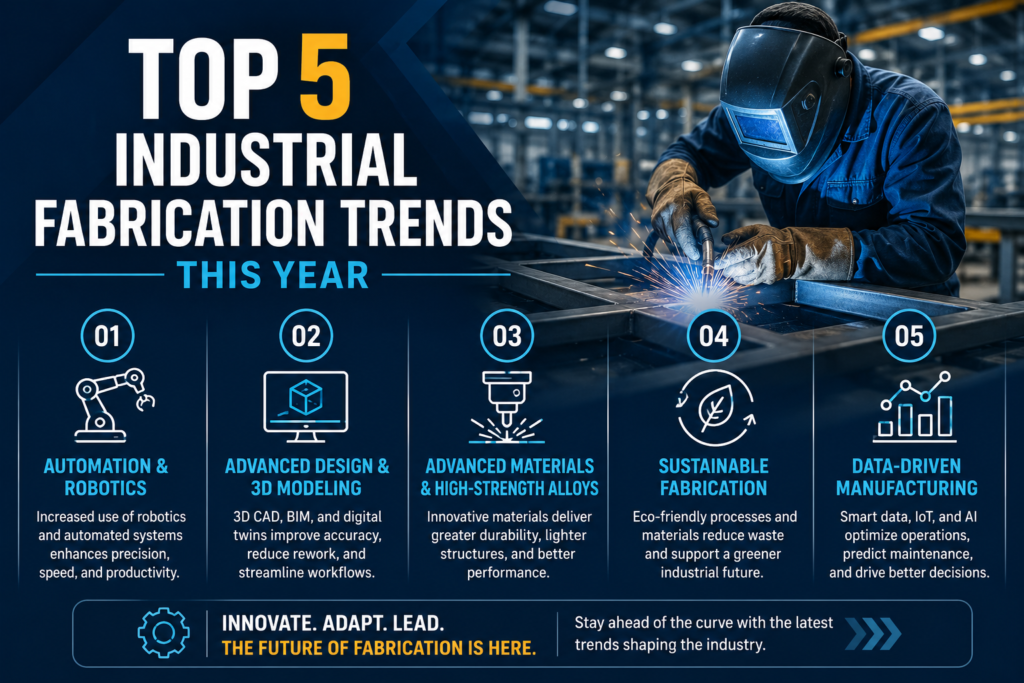
In this blog, we will explore the Top 5 Industrial Fabrication Trends This Year and examine how these developments are shaping the future of industrial fabrication
Why Industrial Fabrication Is Evolving Rapidly
The industrial sector faces increasing pressure to deliver projects faster, reduce operational costs, improve product quality, and minimize environmental impact. Traditional fabrication methods are gradually being enhanced by modern technologies that streamline processes and improve overall efficiency.
Key Factors Driving Fabrication Innovation
- Increasing demand for precision manufacturing
- Rising labor costs
- Growth of automation technologies
- Sustainability requirements
- Complex project specifications
- Higher safety standards
- Faster project delivery expectations
These factors are encouraging fabrication companies to invest in advanced technologies and smarter production methods.
1. Automation and Robotic Fabrication
Automation continues to be one of the most influential trends in industrial fabrication. Modern fabrication facilities are increasingly integrating robotic systems to improve productivity, accuracy, and consistency.
What Is Robotic Fabrication?
Robotic fabrication involves using programmable machines to perform fabrication tasks such as:
- Welding
- Cutting
- Material handling
- Assembly
- Surface finishing
- Quality inspection
These systems operate with exceptional precision and can perform repetitive tasks more efficiently than manual labor.
Benefits of Automation in Fabrication
Increased Productivity
Automated systems can operate continuously with minimal downtime, significantly increasing production capacity.
Enhanced Accuracy
Robotic equipment reduces human error and delivers consistent fabrication results.
Improved Safety
Automation minimizes worker exposure to hazardous environments and dangerous fabrication processes.
Reduced Costs
Businesses benefit from lower labor expenses and fewer production errors.
As industries seek greater efficiency, automation is becoming a standard feature in modern fabrication facilities.
2. Smart Fabrication and Digital Integration
The rise of Industry 4.0 technologies is transforming fabrication operations through digital connectivity and real-time monitoring.
What Is Smart Fabrication?
Smart fabrication combines advanced software, sensors, and connected machinery to optimize production processes.
Technologies Driving Smart Fabrication
- Internet of Things (IoT)
- Artificial Intelligence (AI)
- Cloud-based monitoring
- Digital production management
- Predictive maintenance systems
These technologies provide fabrication companies with valuable data that improves decision-making and operational performance.
Advantages of Smart Fabrication
Real-Time Monitoring
Managers can track production progress instantly and identify potential issues before they become major problems.
Predictive Maintenance
Equipment maintenance can be scheduled proactively, reducing unexpected breakdowns.
Better Resource Management
Digital systems help optimize material usage and reduce waste.
Improved Project Planning
Accurate production data enhances scheduling and workflow efficiency.
Smart fabrication is helping businesses achieve greater control and visibility throughout the manufacturing process.
3. Advanced CNC Cutting Technologies
Computer Numerical Control (CNC) technology continues to revolutionize industrial fabrication by delivering unmatched precision and efficiency.
What Is CNC Fabrication?
CNC machines use computer-controlled systems to perform fabrication processes such as:
- Laser cutting
- Plasma cutting
- Waterjet cutting
- Metal shaping
- Drilling
- Milling
These systems can produce highly accurate components with minimal material waste.
Benefits of Advanced CNC Fabrication
Exceptional Precision
Modern CNC machines can fabricate complex components with extremely tight tolerances.
Faster Production
Automated cutting processes significantly reduce manufacturing time.
Improved Quality
Computer-controlled operations ensure consistent results across large production runs.
Material Optimization
Advanced software minimizes material waste and improves cost efficiency.
Industries such as construction, automotive manufacturing, aerospace, and heavy engineering increasingly depend on CNC fabrication technologies.
4. Sustainable and Eco-Friendly Fabrication Practices
Sustainability has become a major focus across all industrial sectors, including fabrication. Companies are actively seeking environmentally responsible solutions that reduce waste and energy consumption.
Why Sustainability Matters in Fabrication
Environmental regulations and customer expectations are encouraging businesses to adopt greener production methods.
Sustainable Fabrication Practices Include
- Material recycling
- Energy-efficient machinery
- Waste reduction programs
- Low-emission manufacturing processes
- Eco-friendly coatings and finishes
Benefits of Sustainable Fabrication
Reduced Operating Costs
Efficient resource utilization lowers production expenses.
Environmental Compliance
Companies can meet evolving environmental standards and regulations.
Improved Corporate Reputation
Sustainable practices strengthen brand image and customer trust.
Long-Term Business Growth
Green manufacturing initiatives support future market opportunities.
Businesses that invest in sustainable fabrication practices often gain a competitive advantage in today’s environmentally conscious marketplace.
5. Customized and Modular Fabrication Solutions
The demand for customized fabrication solutions continues to grow as industries require specialized equipment and structures tailored to their operational needs.
What Is Modular Fabrication?
Modular fabrication involves manufacturing components off-site before transporting them for final assembly.
Applications of Modular Fabrication
- Industrial structures
- Equipment platforms
- Pipe racks
- Warehouses
- Manufacturing facilities
- Mechanical systems
Advantages of Modular Fabrication
Faster Project Completion
Off-site fabrication and on-site preparation can occur simultaneously, reducing project timelines.
Improved Quality Control
Controlled fabrication environments ensure consistent workmanship.
Reduced On-Site Labor
Less field work results in lower labor costs and improved safety.
Greater Design Flexibility
Customized fabrication solutions accommodate unique project requirements.
industrial fabrication industrial fabrication industrial fabrication industrial fabrication industrial fabrication industrial fabrication industrial fabrication industrial fabrication
Modular fabrication is becoming increasingly popular for industrial and commercial construction projects due to its efficiency and scalability. Contact Me