
Fabrication plays a vital role in industrial, commercial, and construction projects. Whether you require structural steel fabrication, custom metal fabrication, industrial equipment fabrication, or architectural metal works, choosing the right fabricator can significantly impact the quality, durability, and success of your project.
Many businesses focus solely on price when selecting a fabrication contractor. However, the lowest quote does not always guarantee the best value. Poor workmanship, delayed delivery, inadequate quality control, and lack of technical expertise can result in costly repairs and project delays.
Before finalizing a fabrication partner, it is essential to evaluate several critical factors that ensure quality workmanship, timely project completion, and long-term reliability.
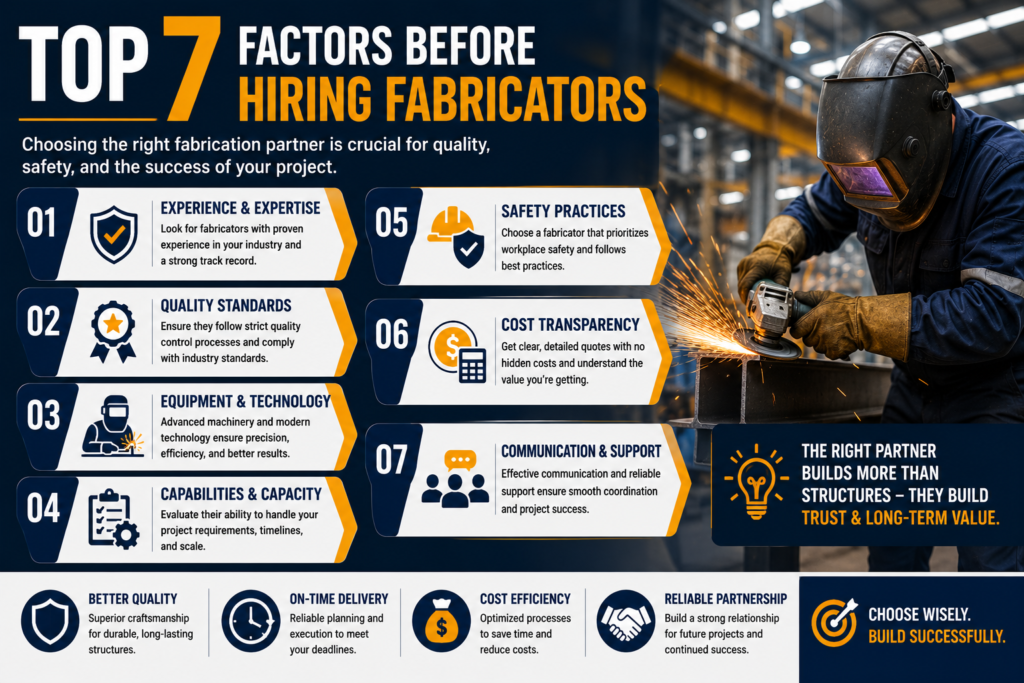
In this blog, we will discuss the Top 7 Factors Before Hiring Fabricators to help you make an informed decision for your next industrial or construction project.
1. Experience and Industry Expertise
The first factor to consider is the fabricator’s experience in the industry.
An experienced fabrication company understands different materials, fabrication techniques, industry standards, and project requirements. Their expertise enables them to handle complex projects efficiently while maintaining quality and safety standards.
Why Experience Matters
- Better understanding of fabrication processes
- Ability to handle custom designs
- Reduced chances of errors
- Faster project execution
- Improved problem-solving capabilities
When evaluating a fabricator, ask about:
- Years of industry experience
- Types of projects completed
- Industries served
- Specialized fabrication services
A fabricator with a proven track record can provide confidence that your project will be completed professionally.
2. Quality of Workmanship
Quality is one of the most important factors when hiring fabricators.
Poor fabrication can lead to structural weaknesses, equipment failures, safety risks, and increased maintenance costs. A reliable fabricator follows strict quality control procedures throughout the manufacturing process.
Indicators of High-Quality Fabrication
- Precision cutting and welding
- Smooth finishing
- Accurate dimensions
- Strong structural integrity
- Compliance with project specifications
Before making a decision, request:
- Previous project photographs
- Sample work
- Client references
- Quality assurance procedures
Inspecting past work can provide valuable insights into the fabricator’s capabilities and commitment to excellence.
3. Equipment and Technology
Modern fabrication requires advanced machinery and technology to achieve precision, efficiency, and consistency.
Fabricators using updated equipment can produce superior results while minimizing production time and errors.
Essential Fabrication Equipment
- CNC cutting machines
- Laser cutting systems
- Plasma cutting equipment
- Hydraulic bending machines
- Advanced welding equipment
- CAD/CAM software
Benefits of Modern Technology
- Greater accuracy
- Faster turnaround times
- Improved consistency
- Reduced material wastage
- Enhanced project efficiency
When discussing your project, inquire about the tools and technology the fabrication company uses to ensure they can meet your requirements.
4. Material Quality and Sourcing
The quality of raw materials directly affects the strength, durability, and performance of fabricated products.
Reputable fabricators source materials from trusted suppliers and maintain strict quality standards.
Common Fabrication Materials
- Mild steel
- Stainless steel
- Aluminum
- Galvanized steel
- Copper
- Brass
Questions to Ask
- Where do they source materials?
- Are material certifications available?
- Do they use industry-standard grades?
- How is material quality verified?
Using high-quality materials ensures your fabricated structures and components can withstand demanding operational conditions and provide long-term value.
5. Certifications and Safety Standards
Safety and compliance should never be overlooked when hiring fabricators.
Professional fabrication companies adhere to industry regulations, safety guidelines, and quality certifications that demonstrate their commitment to excellence.
Important Certifications
- ISO Quality Management Systems
- Welding certifications
- Industry-specific compliance standards
- Safety management certifications
Why Certifications Matter
- Assures quality workmanship
- Reduces project risks
- Enhances workplace safety
- Ensures regulatory compliance
- Improves reliability
Fabricators with recognized certifications often maintain higher operational standards and provide greater peace of mind to clients.
6. Project Timeline and Delivery Capability
Timely completion is crucial for industrial and construction projects. Delays in fabrication can impact multiple stages of project execution, leading to increased costs and operational disruptions.
Before hiring a fabricator, evaluate their ability to meet deadlines consistently.
Factors Affecting Delivery Performance
- Workforce capacity
- Manufacturing capabilities
- Project management systems
- Supply chain efficiency
- Production scheduling
Questions to Consider
- What is the estimated turnaround time?
- Can they handle urgent requirements?
- How do they manage project delays?
- Do they provide regular progress updates?
A reliable fabricator should offer realistic timelines and maintain transparent communication throughout the project.
7. Reputation, Reviews, and Customer Support
A fabricator’s reputation often reflects the quality of their services and customer satisfaction levels.
Positive client feedback and strong industry relationships indicate professionalism, reliability, and consistent performance.
How to Evaluate Reputation
- Online reviews
- Client testimonials
- Case studies
- Portfolio of completed projects
- Referrals from industry contacts
Importance of Customer Support
Good customer service ensures:
- Clear communication
- Prompt issue resolution
- Better project coordination
- Long-term business relationships
Choose a fabricator who values client satisfaction and remains responsive throughout the project lifecycle.
Additional Tips for Choosing the Right Fabricator
Beyond the seven key factors discussed above, consider these additional recommendations:
Request Detailed Quotations
A professional fabricator should provide a comprehensive quote that includes:
- Material costs
- Labor charges
- Fabrication processes
- Delivery expenses
- Project timelines
Avoid vague estimates that may result in unexpected costs later.
Visit Their Facility
If possible, visit the fabrication workshop to assess:
- Equipment condition
- Workforce skills
- Safety practices
- Production capacity
- Quality control procedures
A site visit can help verify whether the company has the resources needed for your project.
Compare Multiple Fabricators
Obtaining quotations from multiple fabricators allows you to compare:
- Pricing
- Capabilities
- Experience
- Delivery schedules
- Service quality
The goal should be finding the best overall value rather than simply selecting the lowest bidder.
Common Mistakes to Avoid When Hiring Fabricators
Many businesses make avoidable mistakes during the selection process.
Choosing Based Only on Price
Low-cost fabrication often compromises quality, resulting in higher long-term expenses.
Ignoring Experience
Fabricators lacking relevant experience may struggle with project-specific requirements.
Skipping Reference Checks
Speaking with previous clients provides valuable insight into reliability and performance.
Overlooking Safety Standards
Failure to verify safety practices can increase project risks and liabilities.
Not Reviewing Contracts Carefully
Always ensure project scope, timelines, costs, and responsibilities are clearly documented.
Avoiding these mistakes can save significant time, money, and frustration.
Why Professional Fabrication Services Matter
Professional fabrication services contribute to:
- Enhanced structural strength
- Improved project efficiency
- Higher safety standards
- Reduced maintenance costs
- Long-term durability
- Better return on investment
Whether you’re constructing industrial facilities, manufacturing equipment, installing structural steel, or developing commercial infrastructure, the right fabrication partner plays a critical role in project success.
Conclusion
Selecting the right fabricator is one of the most important decisions for any industrial, commercial, or construction project. By evaluating factors such as experience, workmanship quality, technology, material standards, certifications, delivery capability, and reputation, businesses can minimize risks and maximize project outcomes.
The Top 7 Factors Before Hiring Fabricators outlined in this guide provide a practical framework for choosing a trusted fabrication partner. Investing time in proper evaluation today can help prevent costly mistakes and ensure superior project performance in the future.
If you are looking for reliable fabrication services, always partner with experienced professionals who prioritize quality, safety, and customer satisfaction. The right fabricator will not only meet your project requirements but also contribute to the long-term success of your business.
SEO Meta Title
Top 7 Factors Before Hiring Fabricators | Expert Guide
SEO Meta Description
Discover the top 7 factors before hiring fabricators. Learn how to choose the right fabrication company for quality workmanship, timely delivery, and cost-effective project success.